
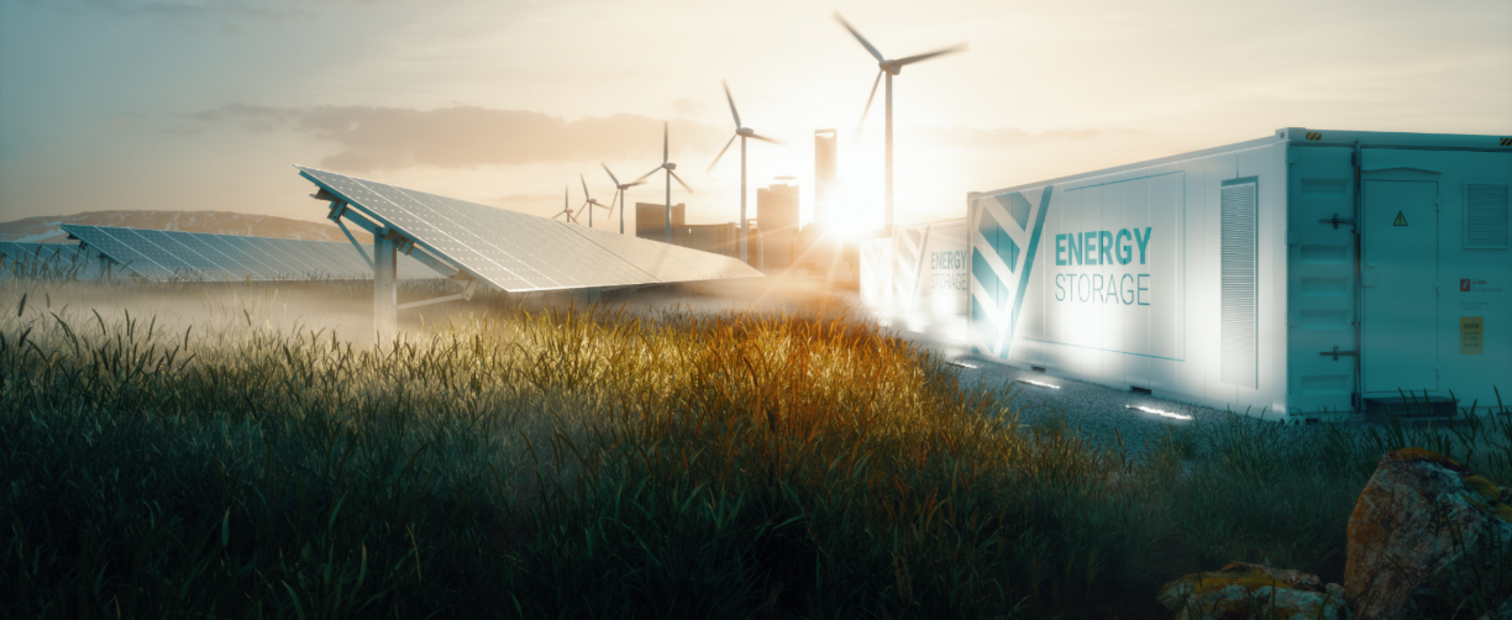
Battery energy storage system (BESS)
Fuse-link solutions for a reliable energy transition.
Breaking capacity up to 260kA
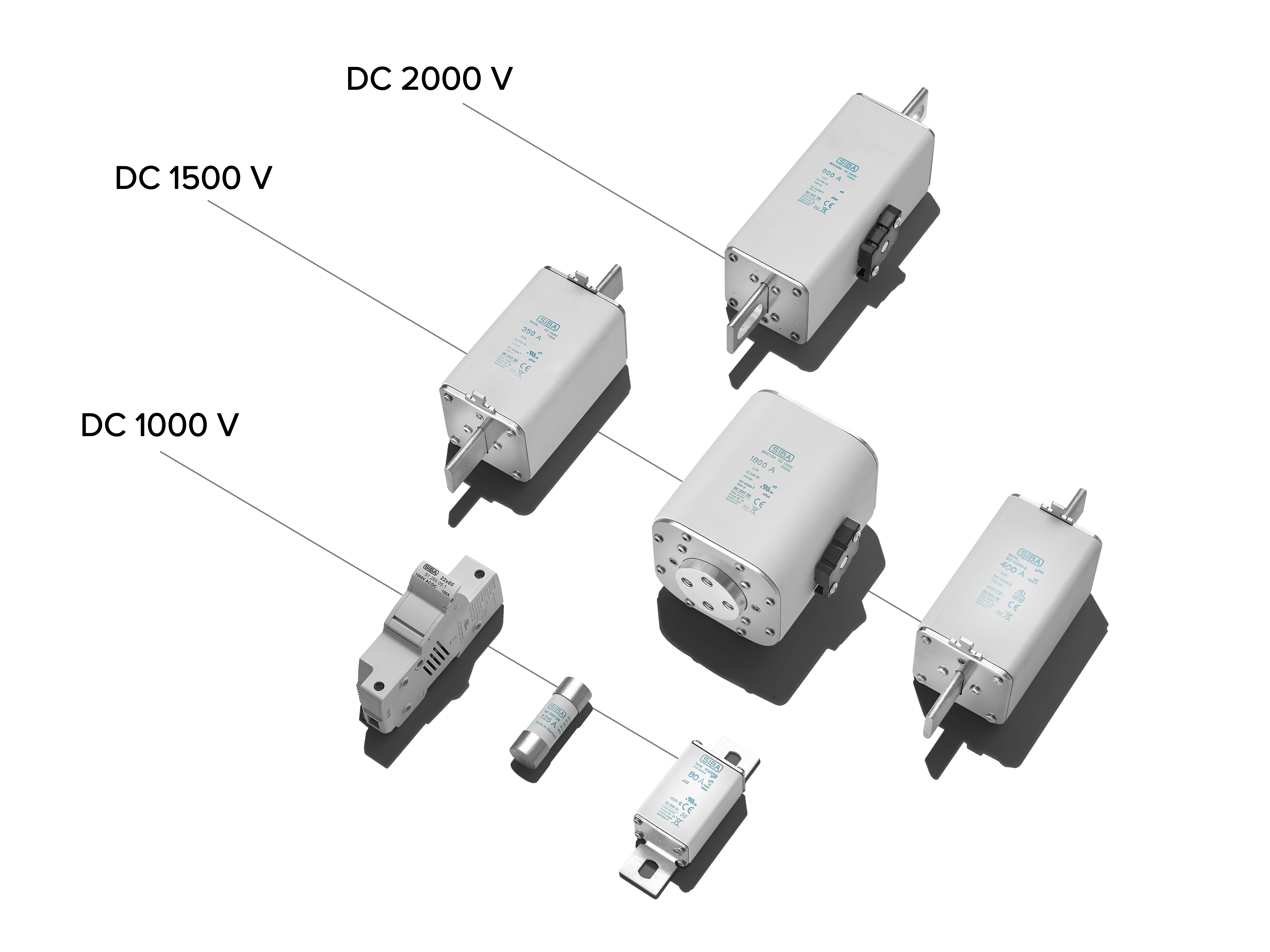
Rated current up to 2000A at up to 2000V DC
Utilization categories gBat / aBat in accordance with IEC 60269-7 and UL 248-21
Suitable for bank, rack and moduleapplications
Optimal protection of BESS systems
Overview of BESS expertise
- Fuse-link solutions from BESS experts
- Selection of suitable fuse-links
- Innovative concepts
- High-quality product range
Energy in transition – a focus on storage
The switch to renewable energy is fundamentally transforming the electricity grids. In order to use electricity from solar and wind power reliably even when generation levels fluctuate, high-performance storage solutions are required. BESS make exactly that possible: They store surplus energy and release it when needed – efficiently, flexibly and sustainably.
Avoiding faults – preventing downtime
Improper fuse-links design can result in high costs due to damage or downtime. Our BESS experts are on hand to answer any questions you may have, and to help you find the right fuse-link solution for your system – tailored to your technology, application and protection requirements.
Innovation for a sustainable energy future
Battery storage technologies are advancing rapidly, and so are we. Our development department is constantly working on innovative fuse-link concepts designed to meet the most demanding requirements. With products in the aBat and gBat utilization categories, you provide your systems with optimum, future-proof protection.
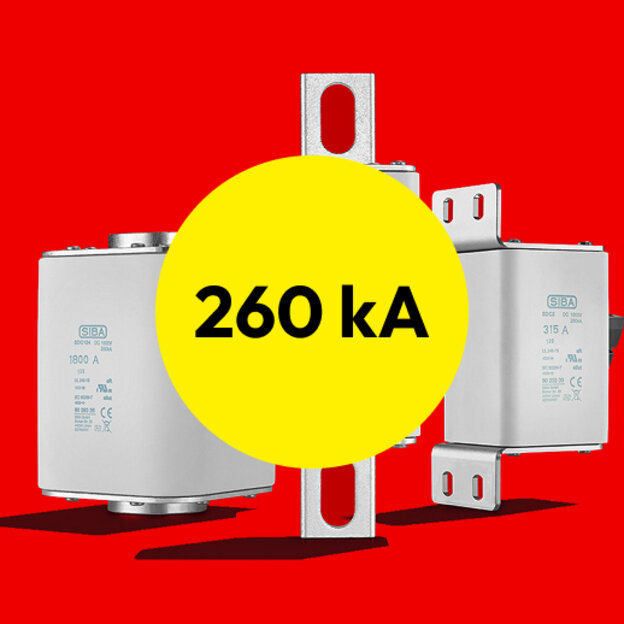
260kA breaking capacity – maximum protection for high-capacity battery storage systems
CURRENTLY THE STRONGEST: Our fuse-links set new standards – with a rated breaking capacity of up to 260kA at 1500V DC.
As battery energy storage systems (BESS) are rolled out worldwide, demands are increasing not only in terms of efficiency and capacity, but also regarding short circuit protection. Modern storage systems place the highest demands on fuse-link technology, as short circuit currents in the range of several hundred kA can occur. SIBA addresses this challenge by conducting tests in internationally recognized laboratories and is already testing BESS fuse-links at currents of up to 260kA.
Interview
The challenge: Rising risks as power levels increase
The trend towards larger and more powerful systems is being driven largely by government funding programs, the energy transition, the expansion of renewable energy and the growing need for grid stability. This highlights the need for an extremely robust and reliable protection strategy – both for new projects and for scaled-up existing installations, as the potential risk of faults increases as the number of storage units grows.
Our response: Fuse-links with 260kA at 1500V DC
Through targeted enhancements to the aBat and gBat utilization categories, we have adapted our fuse-links to meet these requirements. The result: currently the highest rated breaking capacity on the market.
- 260kA at 1500V DC
- Maximum system safety at high DC currents
- Future-proof design for scalable BESS architectures
- Certified according to cRUus

This new utilization category not only enhances safety, it also gives you greater design flexibility, compliance to standards and long-term technological viability
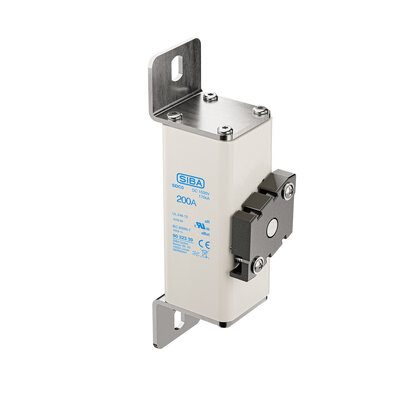
9022339
- Dimensions:
SM142
Rated current:
25A - 200A
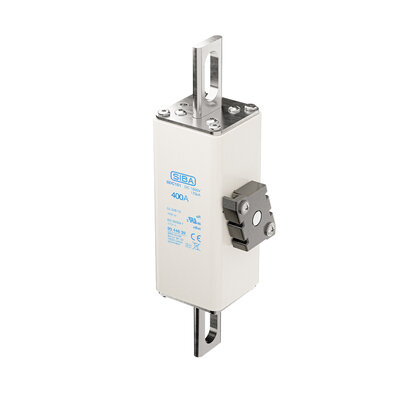
9044639
- Size:
SQB-DC151
Rated current:
200A - 630A
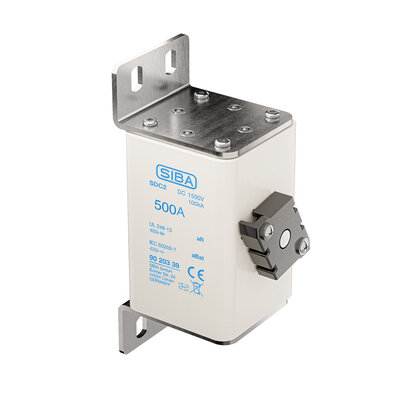
9020339
- Dimensions:
SM142
Rated current:
125A - 500A
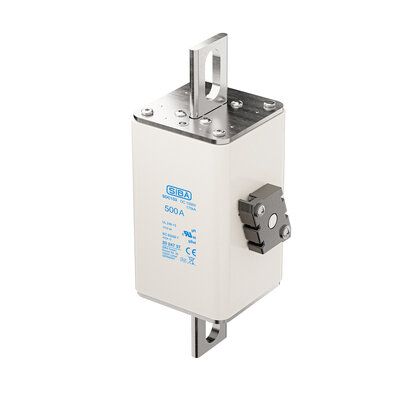
2024737
- Size:
SQB-DC153
Rated current:
100A - 630A
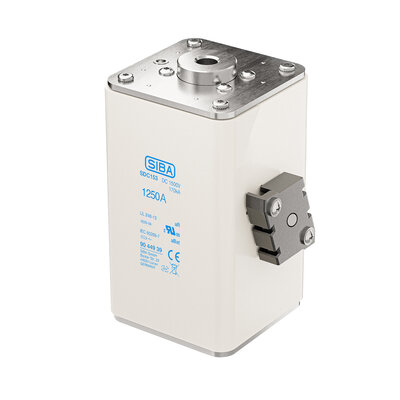
9044939
- Size:
SQB-DC153
Rated current:
750A - 1400A
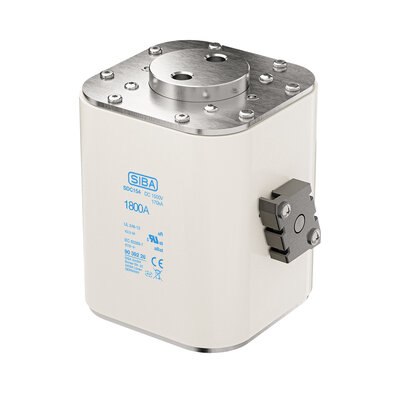
9039226
- Size:
SQB-DC154
Rated current:
500A - 2000A
2000V DC architectures – the new standard for battery storage systems?
The demands placed on modern battery storage solutions are growing rapidly: greater capacity, higher efficiency and lower system costs. In this context, the focus is shifting to the next stage of technological development –
2000V DC. While 1000V and 1500V systems have long been regarded as the standard, higher voltage levels are emerging as the logical next step: They enable more compact architectures and open up
new possibilities for system design.
More and more manufacturers and system integrators are looking into higher voltages. However, as voltages increase, so do the demands placed on safety concepts, component development and
system architecture. Our experts have been working on 2000V DC architectures since the early stages of development – driven by conviction and with a long-term vision.
Interview
A view into the future of energy storage – with insights from Thorsten Falkenberg (New Business Development Manager).
In an interview with New Business Development Manager Thorsten Falkenberg, we explore the opportunities, challenges and technological requirements of this new generation of systems.
In complex battery storage systems, a careful protection strategy is essential. Particularly important is the selective tripping of fuse-links. If protective devices are connected in series within a common circuit path, selectivity must be evaluated with respect to tripping currents and response times. Careful planning and structural design of the fuse-links ensure that overload and short circuit faults are effectively isolated. Lack of a selectivity strategy or one that is poorly designed can cause unnecessary downtime, safety risks and consequential damage.
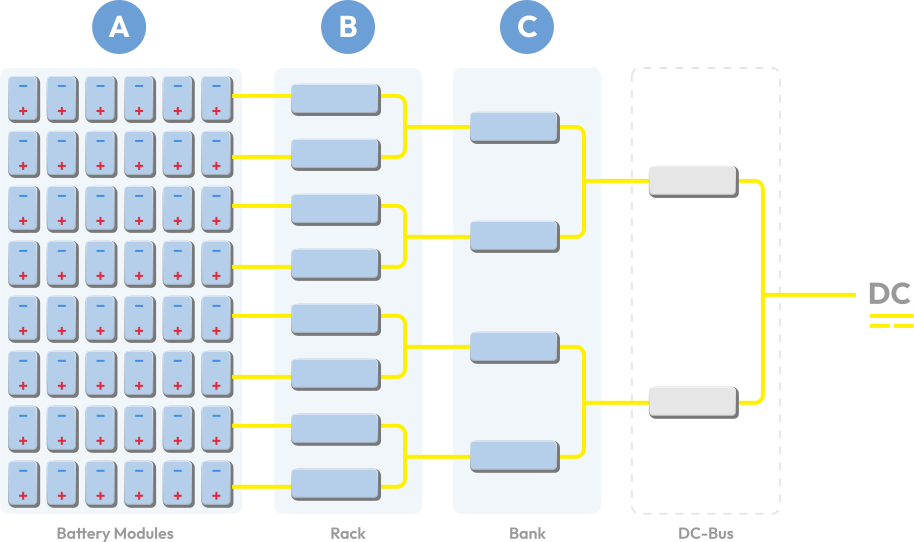
Selectivity in battery applications
With regard to the selectivity of two fuse-links connected in series within a common power path, the following should be considered:
- The rated current of the upstream fuse-link must be higher than that of the downstream fuse-link.
- The time-current characteristics of the two fuse-links in question must have a sufficient margin. This margin is achieved when the characteristic curve of the downstream fuse-link maintains a margin of 200% relative to that of the upstream fuse in the direction of current flow. It is essential to compare the characteristic curves within a common coordinate system.
- The fusing integral of the upstream fuse-link must be higher than the breaking integral of the downstream fuse-link. This applies under the assumption that the minimum fusing integral and the maximum breaking integral are specified, as is the case for semiconductor protection fuse-links.
Read the tips from the experts:
“Fuse-link selection for BESS – the key factors for safe battery storage systems”
Insights & inspiration
When a technical fault turns into a wildfire
A forest fire is not a symbol. It is a possible scenario. This is because battery energy storage systems (BESS) operate at high energy densities and voltages. A short circuit or overload can have serious consequences if the fuse-link selection is incorrect. In the worst-case scenario, a component that is inadequately protected can lead to overheating, arcing or even fires.
Between 2017 and 2022, the number of BESS installations increased significantly, while the number of safety incidents increased only slightly. Many documented fires involved older systems that were installed before the introduction of modern safety standards, such as the fire in California, USA in September 2024.
Modern BESS systems are equipped with monitoring systems, automatic fire suppression systems and robust enclosures to minimize the risk of fire. In the event of a forest fire, BESS can serve as an emergency power supply for critical infrastructure that is at risk from the fire. Mobile BESS units can be deployed to support fire-fighting operations by supplying power to water pumps and other fire-fighting equipment.
In our specialist testing and development facilities, we make sure that every fuse-link delivers what it promises. From non-destructive testing using X-ray technology and climatic stress tests to practical process optimization in the Innovation Lab: Our measures ensure the highest reliability – even under extreme conditions. Discover how we make the difference with state-of-the-art infrastructure.
X-ray imaging device
A look inside

We inspect the internal structure of our fuse-links using state-of-the-art X-ray technology, non-destructively and with precision. In the process, key characteristics such as fuse-link conductor geometry, positioning, and solder joints are monitored directly during production. Where conventional visual inspection reaches its limits, X-ray technology enables reliable evaluation of hidden structures. This method also helps to identify potential faults at an early stage and ensures consistently high product quality, even in new production processes. This is how we ensure that our fuse-links consistently meet our customers’ high standards due to continuously optimized development processes.
Climate chamber
Precision for demanding operating conditions
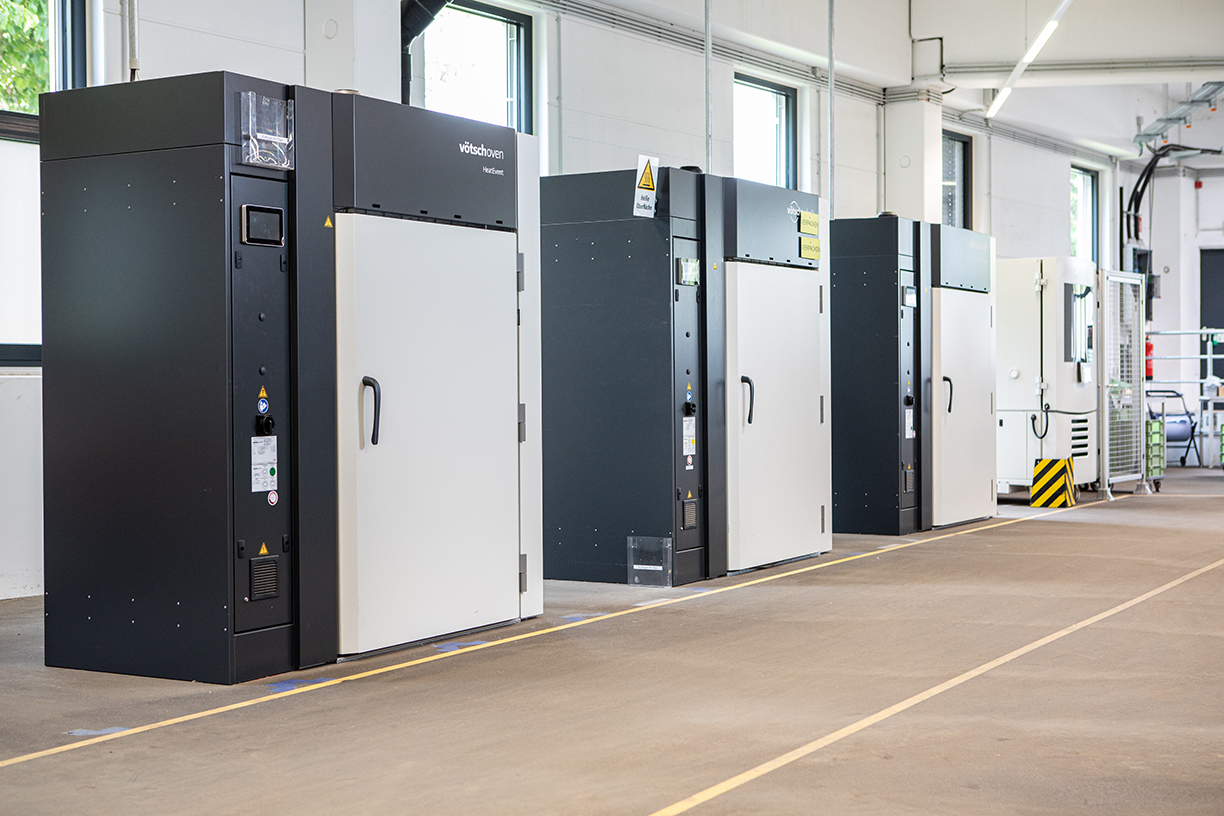
In our climate chamber, we simulate various environmental conditions such as temperature, humidity and stress cycles – tailored to the specific requirements of customers. Our tests go beyond the standard requirements, as we are also able to test outside the usual commercial ambient temperature ranges. This is how we test all types of fuse-links under realistic and extreme conditions. These tests enable us to identify weaknesses at an early stage and specifically optimize our products. Customers benefit from fuse-links that continue to function reliably even in changing or extreme environments. By conducting our own tests we are able to respond flexibly to specific customer requirements, thereby ensuring highest standards of quality and safety.
SIBA Laboratory
Quality reliably tested
In its in-house laboratory, SIBA carries out extensive testing on fuse-links, including characteristic curve and cycle tests, temperature rise measurements and environmental and stress tests. The aim is to ensure that our products function properly and can withstand the stress of real-world conditions.
The laboratory plays a key role in the early-stage development of new fuse-links. This allows initial samples to be tested under real-world conditions without causing delays in the production process. As part of its ongoing quality assurance procedures, the laboratory supplements production checks with random sampling tests in accordance with defined standards.
This means customers benefit from consistently high quality standards, rapid response times and the ability to accurately validate specific requirements. The laboratory lays the foundations for innovative, reliable products – and strengthens confidence in our solutions.
The energy storage industry is undergoing a major transformation. New cell technologies, increasing grid requirements, growing system sizes and coupling with hydrogen are bringing about major changes to the technical landscape. However, one thing remains constant: The need for reliable, high-performance and future-proof protection technology.
Across four thematic sections, we explore the key drivers of change in storage technologies – and how we, as specialists in fuse-link technology, respond to them.
Lithium-ion
The dominant technology – but for how much longer?
Lithium-ion batteries are currently the standard for stationary energy storage solutions. Whether in containerized solutions for commercial use, megawatt-scale battery energy storage systems for the grid, or as buffer storage for solar and wind power plants – the technology is scalable, readily available and has been extensively tested.
But development is in full swing:
- New cell formats (e.g. blade, prismatic, pouch) are setting new standards for energy density, safety and packaging.
- Second-life cells from electric vehicles are increasingly being prepared for stationary applications with all the challenges that this entails in terms of aging, variation and safety assessment.
- The industry is simultaneously conducting intensive research into solid-state batteries, sodium-ion systems and other alternatives with a view to sustainability, availability and geopolitical independence.
What does this mean for us as manufacturers of fuse-links?
Protection technology must keep pace with these developments – without relying on cell chemistry. Because whether it’s a new or second-life cell, LFP or solid-state: Short circuit currents remain a reality, and the risk increases with every step up in scale.
That is why, at SIBA, we develop solutions that work across different technologies – compliant with standards, high-performance and easily integrated.
Our DC fuse-links provide flexible protection solutions for current and future generations of cells.
Hydrogen as a long-term storage solution
Competition or a complement to batteries?
The future of energy storage will be hybrid – and green.
While lithium-ion batteries are particularly well suited to short- and medium-term storage (from seconds to hours), hydrogen systems are becoming increasingly important as a sustainable solution for seasonal or long-term storage needs. Governments are promoting power-to-gas schemes, large-scale electrolyzers are being built and power-to-gas is regarded as a key component of the energy transition. Hydrogen can be stored, transported and used across different sectors – although its production is energy-intensive and its reconversion to electricity involves losses.
So the question is not a case of one or the other, but how well the two technologies work together. Integrated systems create new DC intermediate circuits and new switching and storage structures, all in the service of a sustainable and climate-friendly energy supply. Battery systems also remain an indispensable component, for example for grid stabilization and energy storage.
Whether battery, hydrogen or hybrid: Safety is non-negotiable. This is exactly why we provide the right solutions.
Grid requirements are increasing
Storage as an active grid partner
BESS systems are evolving from passive storage solutions into active grid partners.
In addition to simply acting as energy buffers, they now perform functions such as:
- Frequency control (primary / secondary reserve)
- Black-start capability (black start after a power cut)
- Peak shaving (peak load management)
- and grid-friendly power injection during voltage dips or fluctuations.
This new role places high demands on response times, selectivity and availability – particularly in the event of a fault.
Safety technology plays a key role here.
This is because, in the event of transient faults, grid disturbances or internal defects, it must be possible to shut down a system in a targeted but controlled manner without affecting other storage strings, grid connections or the infrastructure.
At SIBA, we develop fuse-links that reliably meet these high standards.
With a DC-rated breaking capacity of up to 260kA at 1500V, we ensure that energy storage systems not only operate in tandem with the grid, but can also actively help shape it.
Modularity and scalability
The transition from MWh to GWh
The energy storage sector is scaling up to new levels.
What was still being planned on a MWh scale just a few years ago is now moving towards GWh levels – with modular, partly containerized units, high-level parallel operation and centralized load management.
The complexity increases with every additional battery unit connected in parallel – as well as the risk of high potential short circuit currents. A single rack may deliver 10-20kA of fault current – with dozens of units in parallel, >200kA is a realistic figure. These values are significantly higher than the minimum requirements of many standards, e.g. IEC 60269-7, which specifies a minimum value of 30kA.
SIBA has responded to this trend at an early stage.
By specifically upgrading our aBat and gBat-category fuse-links for 1500V DC to a rated breaking capacity of up to 260kA, we currently offer one of the most robust solutions on the market.
These fuse-links are not just a protective product but a strategic component for scalable, future-proof energy storage systems. After all, system architecture can only expand if protection technology keeps pace.
Tip from the experts
Fuse-link selection for BESS – the key factors for safe battery storage systems
As large-scale battery storage systems become more widespread, specifying the right fuse-links is becoming increasingly complex and, at the same time, ever more decisive. Rising DC voltages, higher short circuit currents, thermal stresses and multi-level system architectures, from module level to bank level, are placing new demands on protection concepts. Inadequate fuse-link selection can significantly compromise availability, safety and compliance with standards.
This guide sets out, in four clearly structured steps, how modern BESS systems can be protected in a selective, compliant and future-proof method.

Fuses
Comprehensive protection with SIBA fuse-links.
Fuses
Range expansion: gBat – fuse-links for DC 1000V battery storage applications.
Our gBat range is now available in sizes NH1, NH2 and NH3 for DC 1000V. With a rating of up to 400A, our fuse-links feature maximum protection and efficiency for battery storage applications.

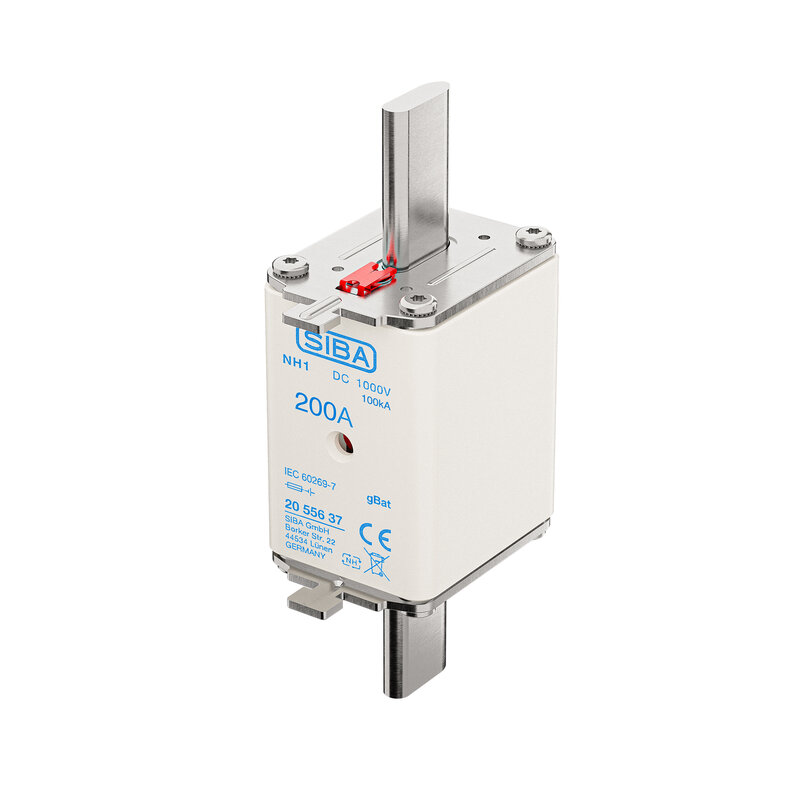
2055637 Fuse-Link
- Size
- NH1
- Dimensions
- Rated current
- 63A - 200A
- Rated voltage
- DC 1000 V
- Characteristic
- gBat
- Rated breaking capacity
- 100kA DC 1000V